
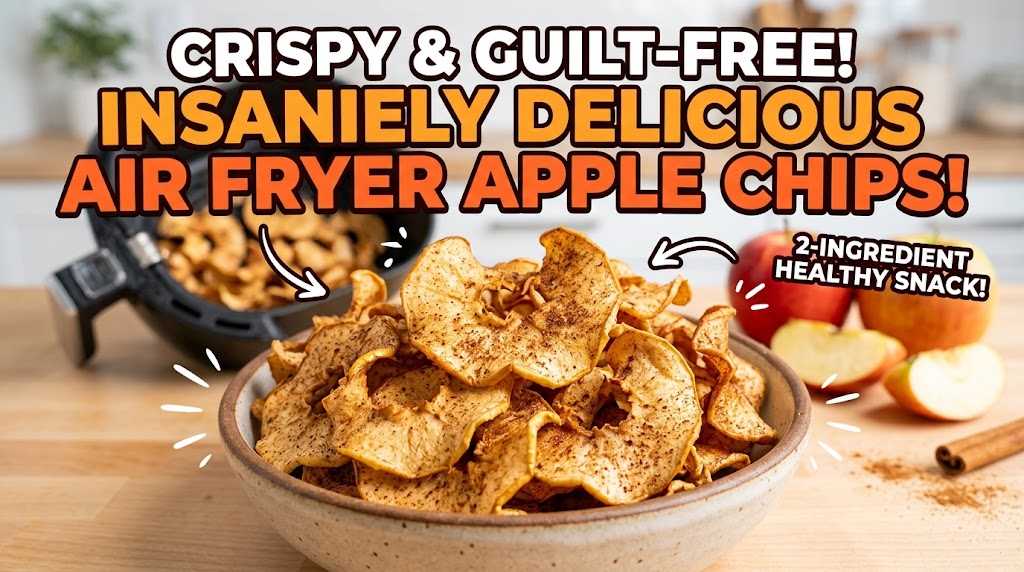
Air Fryer Apple Chips: A Naturally Sweet, Crispy Snack


Store-bought dried apple chips are undeniably tasty, but a tiny 2-ounce bag at the grocery store often costs five dollars and frequently includes added sugar and preservatives you simply don’t need.
Making air fryer apple chips at home requires literally two ingredients: fresh crisp apples and a dusting of ground cinnamon. The air fryer functions as a high-speed dehydrator, gently evaporating moisture while concentrating natural fruit sugars.
As they cool on the counter, the warm apple slices crisp up into light, wafer-thin chips that crackle with every bite. It fills your home with the cozy aroma of warm apple pie and provides a wholesome snack kids will beg for.
Table of Contents
- Why You’ll Love This Recipe
- Ingredients Checklist
- Step-by-Step Instructions
- Culinary Science & Convection Physics
- Essential Kitchen Equipment
- Detailed Ingredients & Substitutions
- Step-by-Step Cooking Masterclass
- Pro Chef Tips & Common Mistakes
- Troubleshooting Matrix
- 5 Global Flavor Variations
- Serving Pairings & Artisanal Sauces
- Nutrition & Meal Prep Blueprint
- Storage, Freezing & Reheating
- Air Fryer Maintenance & Safety
- Frequently Asked Questions
Why You’ll Love This Recipe
- Only 2 ingredients: fresh apples and aromatic ground cinnamon.
- Zero added refined sugar, oil, or artificial preservatives.
- Dehydrates in under 20 minutes compared to 4+ hours in an oven.
- Budget-friendly snack that packs dietary fiber and sweet crunch.
Ingredients
Check off items as you gather them from your pantry and fridge:
Step-by-Step Instructions
Follow along and check each milestone as you cook:
The Culinary Science: Why the Air Fryer Excels at Air Fryer Apple Chips
To understand why this specific preparation yields such transcendent results, it helps to examine the thermodynamics of rapid convection cooking. Traditional radiant heat in a standard oven relies on natural ambient airflow, which is sluggish and prone to localized cold pockets. When moisture evaporates from the surface of air fryer apple chips, it lingers in a stagnant boundary layer of steam, stalling dehydration and preventing crisping.
An air fryer solves this thermodynamic hurdle through focused velocity. By suspending the food inside an aerodynamic perforated chamber and driving superheated air over and under the surface at high speeds, that moisture-rich boundary layer is continuously stripped away. This accelerates the Maillard reaction—the chemical phenomenon where amino acids and reducing sugars rearrange into hundreds of flavor compounds responsible for rich, savory aromatics and deep golden color.
At a cooking temperature of 300°F (149°C), thermal transfer occurs with remarkable efficiency. Surface moisture turns to vapor rapidly while internal fats render smoothly into the surrounding tissue, ensuring that every bite delivers an unmistakable contrast between a delicate outer crust and a succulent, perfectly cooked interior.
Essential Kitchen Tools & Equipment Checklist
Having the right equipment on hand transforms home air frying from an occasional novelty into a streamlined, joyful ritual. Before initiating prep, ensure you have the following high-utility tools ready on your counter:
- Digital Instant-Read Thermometer: The single most impactful tool for culinary accuracy. Relying on visual cues alone can result in underdone centers or dry, overcooked proteins. Look for a fast-response thermocouple probe that registers accurate internal temps in under three seconds.
- Non-Aerosol Refillable Oil Sprayer: Conventional commercial aerosol sprays use propellants like isobutane and propane, along with soy lecithin additives that bake onto non-stick baskets and permanently ruin the coating. A manual pump mister loaded with pure, high-smoke-point avocado oil or light olive oil produces an ultra-fine, pure mist without chemical buildup.
- Heat-Resistant Silicone-Tipped Tongs: Metal utensils will instantly scratch the delicate fluoropolymer or ceramic coating of your air fryer basket. Silicone-tipped tongs offer nimble dexterity when turning delicate items without stripping away coatings or puncturing food.
- Stainless Steel Wire Cooling Rack: Never transfer freshly air-fried foods directly to a flat plate or solid cutting board. The heat radiating from the underside of the hot food will cause residual steam to condense against the flat surface, turning an otherwise pristine crunchy exterior soggy in less than sixty seconds. Always rest hot items on an elevated wire rack for three to five minutes.
- Heavy-Gauge Rimmed Baking Sheet: Place this right beside your air fryer station. It acts as an indispensable staging landing pad when shaking baskets, breading ingredients, or holding resting racks.
Detailed Ingredient Deep-Dive & Smart Substitutions
Exceptional dishes are always the product of mindful ingredient choices. Here is an in-depth look at what each component contributes to the flavor harmony and structural integrity of this recipe:
Core Protein / Base Element
The foundational element of this recipe dictates your cook timing and basket spacing. Freshness is paramount: inspect textures closely and always pat surfaces thoroughly dry with unbleached paper towels before applying seasonings or dredges. If using frozen components, allow them to thaw completely in the refrigerator overnight rather than at room temperature to avoid cellular breakdown and liquid purge that impedes browning.
Substitution Note: Plant-based proteins or alternative cuts can be seamlessly integrated. Adjust your baseline cook time downward by 20-30% for leaner proteins or soy-based options, as they lack the insulating fat cap present in bone-in meats.
The Fat & Moisture Medium
Even though air frying slashes overall oil usage by upwards of 80%, a measured baseline of healthy lipid is essential. Fat serves two vital purposes: it functions as an efficient thermal conductor between the searing air currents and the food surface, and it acts as an oil-soluble solvent that activates the aromatic volatiles in dry spices.
Best Choices: Avocado oil (smoke point: 520°F / 270°C), ghee / clarified butter (smoke point: 485°F / 250°C), or refined coconut oil. Avoid extra virgin olive oil for high-heat settings exceeding 375°F to prevent acrid smoke and scorched flavors.
Seasoning Architecture & Flavor Enhancers
A balanced dry rub or dredge combines granulated aromatics (garlic and onion powder disperse far more uniformly under high velocity airflow than fresh minced pieces, which tend to scorch), depth agents (such as smoked paprika or ground mustard), and structural starches (like cornstarch or potato starch to trap rendering liquids).
Salt Discipline: Always measure fine sea salt or diamond crystal kosher salt accurately. Coarse crystalline salts will bounce off dry surfaces in the basket, whereas fine-grain salts adhere effortlessly and season the interior through osmotic pressure.
Step-by-Step Cooking Masterclass: Critical Nuances for Success
Executing this recipe with consistent, restaurant-caliber polish requires understanding the small nuances embedded within each cooking phase. Follow this detailed breakdown to eliminate guesswork:
Phase 1: The Pre-Cook Preparation & Hydration Check
Preheating your air fryer is non-negotiable. While some manufacturers claim preheating is optional, placing food into a cold chamber subjects it to several minutes of warm, sluggish air before the heating coil reaches full intensity. During this lag period, external starches absorb damp moisture rather than searing shut, increasing the likelihood of sticking and soggy coatings. Run your air fryer empty at 300°F (149°C) for 3 to 5 minutes prior to loading.
Phase 2: Basket Geometry & Airflow Management
The number one pitfall among home cooks is crowding the basket. It is understandable to want dinner finished in a single batch, but stacking or overlapping items forces the air fryer to function as a high-priced vegetable steamer. Maintain at least 1/2-inch of free airspace between individual pieces. If necessary, cook in two successive batches; the first batch can easily be flashed back to piping hot crispness at 400°F for 90 seconds just before serving.
Phase 3: The Mid-Cycle Intervention (Shake or Flip)
Most air fryer units have heat sources positioned solely on the top. This creates an intense top-down radiant direct heat accompanied by bottom airflow. Halfway through the 16-18 mins duration, slide open the drawer. Use this moment to evaluate browning: if any powdery or dull dry spots appear, deliver a microscopic spritz of oil directly onto them. Use your silicone tongs to flip items over so the underside receives direct exposure to upper heating elements.
Phase 4: The Internal Doneness Verification
Never rely exclusively on a timer. Variations in air fryer models (wattage ranges from 1400W to 1800W across leading brands) and starting food temperatures can shift cooking duration by 2 to 4 minutes. Insert your digital probe into the geometric center of the thickest portion, away from bones or cooking grids, to verify exact internal readiness.
Complete Troubleshooting Matrix: Solving Common Roadblocks
Even experienced home cooks encounter occasional snags. Keep this handy troubleshooting reference at your fingertips:
| Symptom | Likely Root Cause | Foolproof Fix |
|---|---|---|
| Food is pale or soft, not crispy | Basket is overcrowded; excess moisture trapped on surface; inadequate preheating. | Cook in uncrowded single-layer batches; dry food thoroughly with towels; spritz lightly with high-heat oil. |
| Dry, chalky white spots on exterior | Un-hydrated flour or starch dredge left without oil contact during convection. | Inspect basket at the halfway flip mark and mist all powdery spots with oil spray. |
| Exterior is burning before inside is done | Temperature setting is too high; high-sugar marinades or glazes applied too early. | Drop temperature by 25°F; apply sweet barbecue sauces or honey glazes in the final 2 minutes only. |
| White smoke billowing from air fryer unit | Fat dripping onto the scorching bottom pan below the basket and smoking. | Add 2 tablespoons of water or a slice of sandwich bread to the bottom drawer beneath the basket to capture grease drops without smoking. |
5 Exciting Flavor Variations & Global Spin-Offs
Once you have nailed down this core technique, customize the profile with these five creative regional variations:
- 1. Garlic Herb & Aged Parmesan: Toss hot from the basket with 1 tablespoon of melted salted butter, 2 cloves of grated garlic, 1/4 cup freshly microplaned Parmigiano-Reggiano, and finely chopped Italian flat-leaf parsley.
- 2. Nashville Hot Kick: Whisk 2 tablespoons of hot basting fat or melted butter with 1 teaspoon cayenne pepper, 1/2 teaspoon dark brown sugar, 1/4 teaspoon garlic powder, and a dash of smoked paprika. Brush over the finished pieces right before serving.
- 3. Smoky Chipotle & Lime: Season with a vibrant blend of ground chipotle chile, toasted cumin, sea salt, and finish with a squeeze of fresh lime juice and fresh chopped cilantro.
- 4. Sweet Honey Sriracha Glaze: Warm equal parts raw honey and sriracha chili sauce with a dash of rice wine vinegar and toasted sesame oil. Drizzle over the hot food and scatter with toasted white sesame seeds.
- 5. Mediterranean Lemon & Oregano: Dust with dried wild Greek oregano, lemon zest, cracked black peppercorns, and a pinch of flaky sea salt, served alongside creamy garlic tzatziki dip.
What to Serve Alongside: Curated Side Dishes & Dipping Sauces
A memorable dinner is all about textures and complementary contrasts. Here are thoughtful ideas to assemble a cohesive, well-rounded spread:
🥗 Refreshing Side Dishes
- Crisp apple-cider vinegar coleslaw with shredded green and purple cabbage.
- Charred sweet corn salad with diced red bell peppers and cotija cheese.
- Arugula and shaved fennel salad tossed with lemon-shallot vinaigrette.
- Creamy buttermilk mashed potatoes or baked sweet potato wedges.
🥣 Artisanal Dipping Sauces
- Smoky Fry Sauce: Real mayonnaise, tangy ketchup, smoked paprika, and dill pickle brine.
- Garlic Truffle Aioli: High-quality mayonnaise whisked with garlic puree, white truffle oil, and lemon.
- Spicy Yum Yum Sauce: Mayonnaise, tomato paste, melted butter, garlic powder, and paprika.
- Avocado Cilantro Crema: Ripe avocado blended with Mexican crema, lime juice, and sea salt.
Nutritional Profile & High-Efficiency Meal Prep Strategies
From a nutritional vantage, preparing air fryer apple chips in convection air delivers pronounced health advantages. In standard deep-frying, food is completely submerged in hot cooking fat, which infiltrates porous batter matrixes and significantly increases caloric density. By contrast, air frying achieves identical crispy surface textures using mere teaspoons of oil. This substantially lowers total fat, reduces intake of harmful dietary advanced glycation end-products (AGEs), and keeps the meal remarkably clean without sacrificing comfort-food satisfaction.
Batch Cooking & Meal Prep Blueprint: This recipe is uniquely suited to modern weekly meal prep workflows. You can assemble and season your ingredients up to 24 hours in advance, keeping them sealed in an airtight container in the refrigerator. When dinner time arrives, simply dump into the preheated basket and let the machine do the heavy lifting while you assemble a side salad.
Freezer Strategy: You can also freeze un-cooked, breaded, or pre-portioned batches on a parchment-lined baking sheet for two hours until rock solid, then transfer into heavy-duty freezer zip-top bags for up to three months. To cook directly from frozen, add 3 to 5 minutes to the stated cook time at the same designated temperature without thawing!
Air Fryer Maintenance, Cleaning & Fire Safety Rules
To safeguard your investment and guarantee pristine flavor every time, follow these essential maintenance principles:
- The 5-Minute Post-Cook Soak: Never scrub a warm nonstick basket with coarse steel wool or abrasive scouring pads. As soon as the basket cools to warm, add warm water and a squirt of grease-cutting liquid dish soap. Let it sit for 5 minutes; food residues will slide right off with a soft microfiber sponge.
- Inspect the Upper Element Monthly: Unplug the machine, allow it to cool completely, and flip it gently to inspect the overhead heating coil. If grease splatters have baked onto the coil, wipe them clean with a damp microfiber cloth to prevent lingering acrid smoke on subsequent cooks.
- Maintain Rear Airflow Clearance: Air fryers exhaust substantial hot air from rear ventilation ports. Always operate the appliance at least 5 to 6 inches away from walls, electrical outlets, or under-cabinet trim to prevent discoloration or heat damage to home surfaces.
💡 Pro Chef Tips & Common Mistakes
- Use a mandoline slicer! Uniform thinness is crucial for getting all chips to crisp at the exact same rate.
- Keep temperature at 300°F. If you try to cook them at 375°F or 400°F, the natural apple sugars will scorch and burn before the moisture can evaporate.
- Don’t worry if they feel slightly soft when pulling them from the basket—they firm up and crisp as they cool on the wire rack.
🧊 Storage & Reheating Guidelines
Store completely cooled apple chips in an airtight glass jar or container at room temperature for up to 5 days. If humidity softens them, toss in the air fryer at 300°F for 2 minutes to refresh.
Frequently Asked Questions
What apples are best for air fryer apple chips?
Firm, crisp apples like Honeycrisp, Pink Lady, Fuji, or Granny Smith (for a tart punch) produce the crispest, most flavorful chips.
Do I need to peel the apples first?
No peeling needed! The skin adds color, structure, and wholesome dietary fiber.
Why are my apple chips flying around inside the air fryer?
Because thin apple slices become very light as they dry, the convection fan may blow them around. You can place an air fryer metal trivet or wire rack on top to keep them weighted.
These cinnamon air fryer apple chips make healthy snacking sweet, simple, and satisfying. Slice up an apple this afternoon and let me know which apple variety you used in the comments below!